
English 
Zhengfeng Road, Licheng District, Jinan City, Shandong Province,China
Author: Site Editor Publish Time: 2025-11-23 Origin: Site

By Kevin, Global Sales Manager at Tindo Machinery
"Kevin, I need to triple my nugget production, but I'm getting completely different recommendations from different suppliers. One guy swears by drum formers, another says belt systems are the only way to go. What's the real story here?"
That was Mike from a growing chicken processing plant in Texas last month. He's not alone - this is probably the most common question I get from processors looking to scale up their nugget production.
After 15 years in food processing equipment and countless plant visits, I've seen both systems in action across every type of operation imaginable. Let me break down the real differences so you can make the right choice for your specific situation.
Drum Forming Systems:Picture a large rotating drum with precisely machined cavities around its circumference. As the drum rotates, these cavities fill with your meat mixture from a hopper above. The excess gets scraped off, leaving perfectly portioned nuggets that drop out as the drum continues rotating.
It's like a giant cookie cutter that never stops moving.
Belt Forming Systems:These use two synchronized belts - one flat, one with forming cavities. Your meat mixture gets sandwiched between them under pressure. The cavities shape the nuggets while the flat belt provides the backing pressure needed for proper formation.
Think of it as a continuous press operation.
Speed and Volume:Here's where things get interesting. Everyone assumes drum systems are faster because they look more impressive, but that's not always true.
Our TND-NF drum systems typically run 1,200-2,000 pieces per minute, depending on nugget size. Belt systems usually hit 800-1,500 pieces per minute. So yes, drums have a speed advantage, but it's not as dramatic as most people think.
The real difference is consistency over time. Drum systems maintain their speed regardless of how long they run. Belt systems can slow down slightly as belts stretch or cavities wear.
Mike's operation needed 50,000 nuggets per hour. A drum system got him there easily. A belt system would have required two lines or accepting slightly lower output.
Nugget Density and Texture:Belt systems apply more uniform pressure across the entire nugget surface. This creates denser, more compact nuggets with better binding. Great if you're using lower-fat meat mixtures or want that "premium" dense texture.
Drum systems rely more on the meat's natural binding properties. The nuggets come out slightly less dense but with a more "home-style" texture that some customers prefer.
Edge Definition:Belt systems win here. The constant pressure creates cleaner, sharper edges. Drum-formed nuggets sometimes have slightly rounded edges where the meat flows as it exits the cavity.
For retail presentation, belt-formed nuggets often look more professional. For foodservice where they're getting breaded and fried anyway, it matters less.
Consistency:Both systems are remarkably consistent when properly maintained, but they fail differently. When a drum cavity gets damaged, you get one bad nugget every rotation until you fix it. When a belt cavity gets damaged, you might get several bad nuggets in a row.
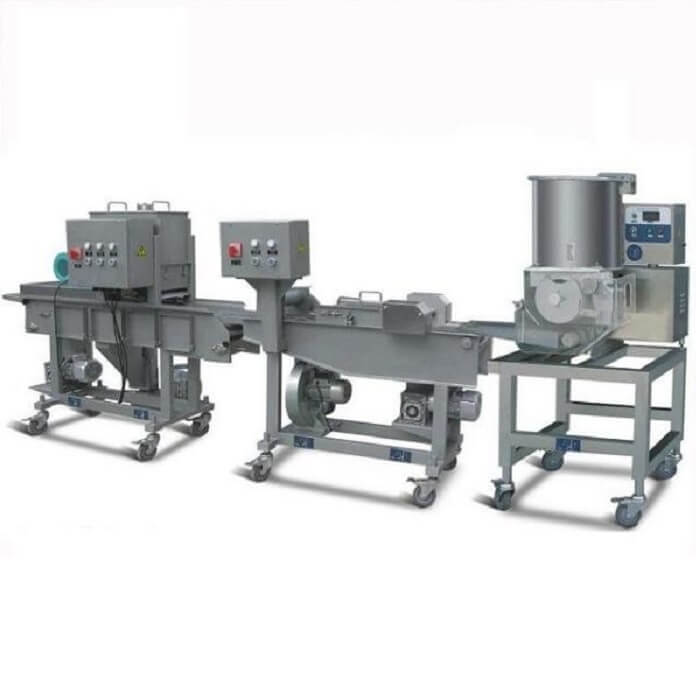
Drum Systems:Simpler mechanical design means fewer things can go wrong. The main wear items are the scraper blades and occasionally a cavity that gets damaged by foreign objects.
Cleaning is straightforward - hose down the drum, replace the scrapers, and you're back in business. Most of our customers do this in 15-20 minutes.
Belt Systems:More complex with two moving belts that need to stay synchronized. Belt tension, alignment, and cavity wear all need regular attention.
Cleaning takes longer because you're dealing with two surfaces and the belt tracking system. Figure 30-45 minutes for a thorough cleaning.
But here's the thing - belt systems often run longer between cleanings because the enclosed design keeps contamination out better.
Initial Investment:Drum systems typically cost 15-25% more upfront. The precision machining required for the drum and cavities is expensive.
Belt systems have lower initial costs but higher ongoing expenses for belt replacement.
Operating Costs:Drum systems use slightly more power due to the rotating mass, but we're talking maybe $50-100 per month difference in a typical operation.
The real cost difference is in consumables. Drum scrapers cost about $200 per set and last 3-6 months. Belt replacement runs $800-1,200 but only needed every 12-18 months with proper care.
Downtime Costs:This is where drum systems shine. When something breaks, it's usually quick to fix. Belt systems can require more complex troubleshooting when alignment issues develop.
Go with Drum Systems if:
You need maximum production speed
You prefer simpler maintenance
You're processing higher-fat meat mixtures
Your operators prefer straightforward equipment
You value quick changeovers between products
Choose Belt Systems if:
Product appearance is critical (retail applications)
You're working with leaner meat formulations
You have skilled maintenance staff
Consistent density is more important than maximum speed
You're processing delicate mixtures that need gentle handling
For most mid-sized operations (20,000-100,000 nuggets per day), I usually recommend our TND-NF drum systems. They're more forgiving, easier to operate, and the speed advantage matters when you're trying to keep up with demand.
For large operations or those supplying retail customers where appearance is critical, belt systems make more sense despite the higher maintenance requirements.
Forget the marketing brochures. Here's what actually determines which system works better for you:
Your meat formulation: High-fat mixtures work better in drums. Lean mixtures need the pressure from belt systems.
Your labor situation: If you have experienced maintenance staff, either system works. If you're relying on general production workers for basic maintenance, drums are more forgiving.
Your customers: Foodservice customers care about consistency and cost. Retail customers care about appearance.
Your growth plans: If you're planning to double production in two years, factor that into your decision now.

The biggest mistake I see is choosing based on price alone. A $15,000 difference in equipment cost is meaningless if the wrong system costs you $500 per day in lost production or quality issues.
We always recommend seeing both systems in action before deciding. Better yet, bring your actual meat mixture and run trials. What works for chicken might not work for fish or plant-based alternatives.
Ready to figure out which system fits your operation? Check out our complete nugget forming line solutions at Tindo. We'll help you run the numbers and maybe arrange a plant visit to see both systems working with products similar to yours.
Because the right forming system isn't about the latest technology - it's about what works best for your specific operation, day after day.
Kevin has been helping food processors optimize their production lines since 2008. Our nugget forming systems are running in operations from small specialty producers to major food manufacturers worldwide.
