
English 
Zhengfeng Road, Licheng District, Jinan City, Shandong Province,China
Author: Tindo Publish Time: 2023-03-27 Origin: Site
Freshly cooked pasta is delicious, but there are many situations where you need to cool it quickly. Whether you're preparing pasta salad, meal-prepping for the week, or running a commercial kitchen, cooling pasta correctly helps maintain its texture, prevents overcooking, and improves food safety.
In this guide, you'll learn the best ways to cool cooked pasta quickly and avoid common mistakes.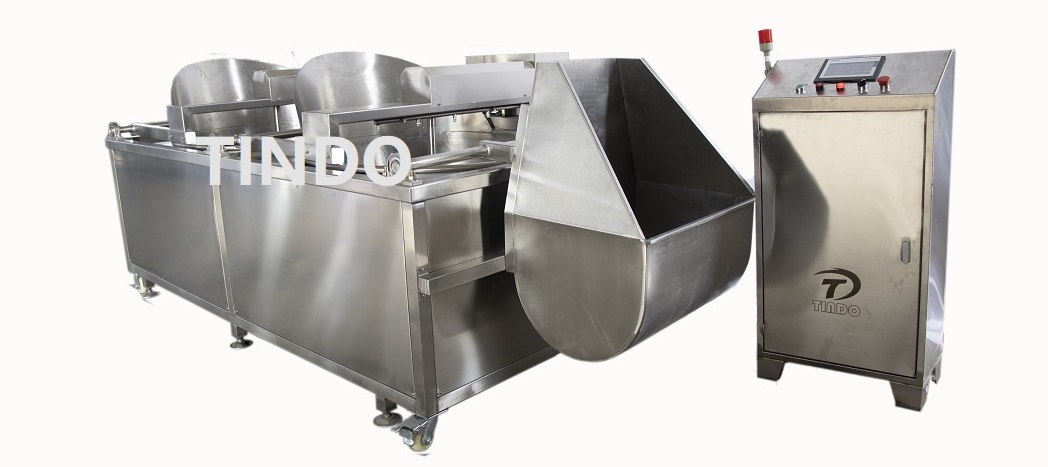
Pasta continues to cook from residual heat after it leaves the boiling water. If it isn't cooled correctly, it may become soft, sticky, or clump together.
Proper cooling also reduces the time food spends in the temperature "danger zone" (40°F–140°F / 4°C–60°C), where bacteria grow rapidly.
For pasta salads or cold dishes, rinse the pasta under cold running water for 30–60 seconds.
This immediately stops the cooking process and removes excess starch that causes sticking.
Best for:
Pasta salad
Cold pasta dishes
Meal prep
Fill a large bowl with ice water and place the drained pasta inside for 1–2 minutes.
This method cools pasta even faster while preserving its texture.
Spread pasta into a thin layer on a clean baking sheet.
The larger surface area allows heat to dissipate quickly.
This technique is commonly used in professional kitchens.
If you're storing pasta for later, lightly coat it with olive oil after cooling.
This helps prevent the noodles from sticking together.
Once the pasta has cooled to room temperature, store it in an airtight container in the refrigerator.
Never place large amounts of hot pasta directly into the fridge, as this raises the internal temperature and slows cooling.
It depends on how you plan to use it.
Yes — for pasta salad, cold dishes, or meal prep.
No — for hot pasta served with sauce, because the starch helps the sauce cling better.
Cooling time depends on the method used.
Cold water rinse: about 1 minute
Ice bath: 1–2 minutes
Baking tray: 10–15 minutes
Refrigerator (after initial cooling): around 20–30 minutes
Avoid these common errors:
Leaving pasta in hot water too long
Storing large batches while still hot
Forgetting to stir during cooling
Cooling too slowly in warm environments
Commercial kitchens and food manufacturers often need to cool hundreds of kilograms of cooked pasta every hour. Unlike home kitchens, where an ice bath or cold running water is usually sufficient, large-scale food production requires faster, more consistent, and hygienic cooling methods.
To achieve this, many commercial facilities use automated cooling equipment, including:
Air cooling conveyors – Cool pasta evenly while moving it through the production line, reducing manual handling.
Spiral cooling systems – Maximize cooling capacity in a compact footprint, making them ideal for continuous production.
Continuous cooling tunnels – Use controlled airflow or chilled air to rapidly reduce product temperature while maintaining consistent quality.
Compared with traditional manual cooling methods, automated cooling systems offer several important advantages:
Improve food safety by reducing the time pasta remains in the temperature danger zone (40°F–140°F / 4°C–60°C).
Reduce labor costs through automated, continuous operation.
Increase production efficiency by handling large volumes of pasta without interrupting the production process.
Ensure consistent product quality by preventing overcooking, sticking, and uneven cooling.
For food manufacturers producing pasta on an industrial scale, selecting the right cooling solution is an important part of building an efficient production line. Modern pasta cooling systems can be integrated with cooking, conveying, packaging, and other processing equipment to create a fully automated workflow, helping manufacturers improve productivity while maintaining high food safety standards.
If you're producing cooked pasta on a commercial scale, choosing the right cooling equipment is just as important as selecting the right cooking process. Tindo provides automated pasta cooling solutions for food manufacturers worldwide.
Can you cool pasta with cold water?
Yes. Cold water immediately stops the cooking process and is recommended for pasta salad and cold dishes.
How do you cool pasta without it sticking together?
Cool the pasta quickly, drain it well, and toss it with a small amount of olive oil if it will be stored before serving.
How long should cooked pasta cool before refrigeration?
Allow the pasta to cool slightly first, then refrigerate it in shallow containers for faster cooling.
Should you rinse pasta after boiling?
Only when making cold dishes. For hot pasta, rinsing removes starch that helps sauces adhere.
Related Equipment for Industrial Pasta Cooling
Tindo provides integrated pasta processing solutions, including cooking systems, de-water machine, packing machine,and complete production lines designed for efficient, hygienic, and continuous food manufacturing.


