
English 
Zhengfeng Road, Licheng District, Jinan City, Shandong Province,China
Author: kevin Publish Time: 2025-12-11 Origin: Jinan TINDO International Co., Ltd
Investing in an industrial Cooking Kettle Mixer is a pivotal decision for any food processing facility. The right machine can skyrocket your production efficiency, ensure consistent flavor, and reduce labor costs. The wrong choice, however, can lead to uneven cooking, frequent downtime, and energy waste.
With various heating methods, agitator types, and capacities available, how do you navigate the market?
At Tindo Tech, we have helped hundreds of manufacturers optimize their production lines. This guide breaks down the critical factors you need to consider to select the perfect equipment for your facility.
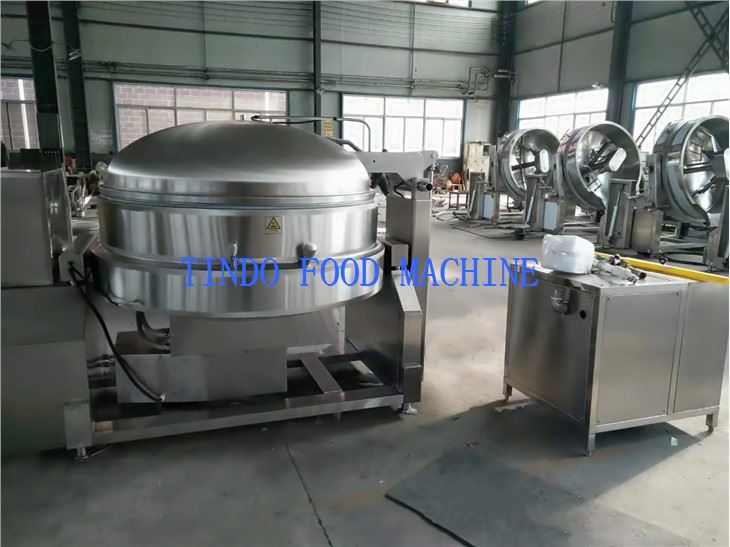
The first step is not looking at the machine, but looking at your product. The viscosity (thickness) and sensitivity of your food determine the type of mixer you need.
For High Viscosity (Pastes, Bean Fillings, Nougat): You need torque and scraping power. Look for a Planetary Cooking Mixer or a Double Sigma Mixer. These machines use multi-axis rotation to scrape the entire bowl surface, ensuring thick ingredients don't stick or burn.
For Low Viscosity (Soups, Sauces, Broths): A standard jacketed kettle with a simple scraper agitator is often sufficient.
For Heat-Sensitive Foods (Milk, Chocolate, Caramel): You require a mixer with precise temperature control and indirect heating to prevent scorching.
Browse by Category: Check our full list of Cooking Kettle Mixers to see models designed for different food textures.
The heating source is the "engine" of your kettle. It affects your cooking speed, energy bills, and food quality. Here is a comparison to help you decide:
Feature | Steam Heating | Gas / Flame | Induction (Electric) | Thermal Oil |
Heating Speed | Fast | Moderate | Fastest | Slow & Gentle |
Temp Control | Good | Difficult | Precise (±1°C) | Stable |
Energy Efficiency | ~75% | ~50% | 93%+ | ~80% |
Best For | Factories with boilers | Outdoor/Low budget | High-tech factories | Delicate sweets |
Expert Tip: If your factory aims for LEED certification or wants to lower carbon footprints, Induction Heating is the superior choice due to its minimal heat loss and lack of exhaust emissions.
Bigger isn't always better. Choosing the wrong size can create bottlenecks.
Calculate Batch Cycles: Don't just look at the kettle volume (e.g., 500L). Consider the working volume (usually 70-80% of total) and the cooking time per batch.
Space Constraints: Measure your facility's door width and ceiling height. Some industrial mixers with hydraulic tilting arms require significant vertical clearance.
Future Proofing: We recommend buying a kettle with 20% more capacity than your current daily requirement to accommodate future growth without needing an immediate upgrade.
Not all stainless steel is created equal. When comparing suppliers, look for these trust signals:
Material Quality: Ensure the contact parts are made of SUS304 or SUS316 stainless steel. Cheaper alternatives (like 201 steel) will rust and violate food safety regulations.
Customization: Can the supplier adjust the stirring speed or add a vacuum system? A manufacturer like Tindo Tech offers customization because we build the machines ourselves, whereas resellers cannot.
After-Sales Support: Industrial machines work hard. Does the supplier offer spare parts kits? Do they have video tutorials for maintenance?
It is tempting to choose the cheapest option, but the initial price tag is deceptive.
Energy Costs: A cheap gas kettle might save you $2,000 upfront but cost you $5,000 more in fuel per year compared to an efficient Induction Mixer.
Labor Savings: An automatic mixer with hydraulic tilting and programmable logic (PLC) might cost more, but if it allows one operator to manage three kettles instead of one, the ROI is rapid.
Recommendation: Allocate budget not just for the machine, but for a solution that lowers your operational costs over the next 5-10 years.
Selecting the right Cooking Kettle Mixer requires balancing your product's physical properties with your factory's infrastructure.
Choose Induction for speed and precision.
Choose Steam if you have existing infrastructure.
Choose Planetary Mixing for thick, sticky products.
At Tindo Tech, we don't just sell machines; we provide processing solutions.
Ready to find your match? Explore our Cooking Kettle Mixer Collection to view detailed specs and request a quote today.
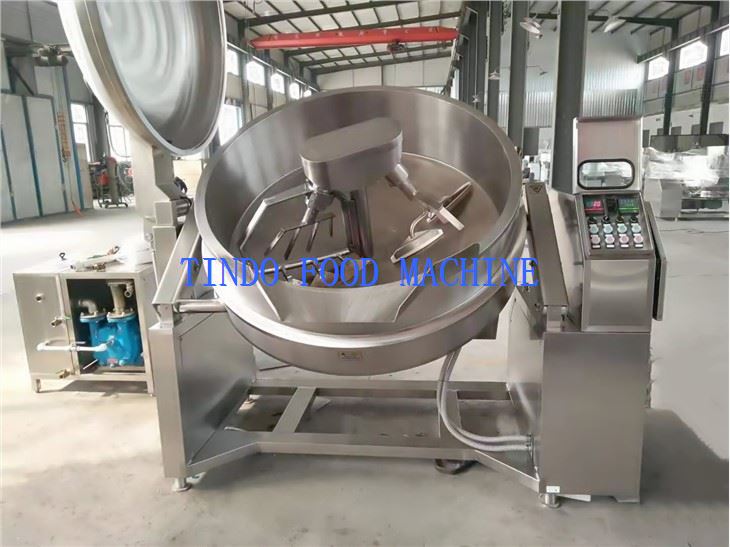
Q1: How do I know if I need a vacuum cooking kettle?
A: If you want to lower the boiling point to preserve color and vitamins (common in fruit jams) or remove air bubbles to increase shelf life, a vacuum model is essential.
Q2: What is the difference between a tilting and a vertical stationary kettle?
A: Tilting kettles (hydraulic or manual) allow you to pour out viscous products (like sauces or pastes) easily. Stationary vertical kettles usually have a bottom drain valve, which only works for thin liquids like soups or water.
Q3: Can Tindo Tech customize the voltage for my country?
A: Yes. We customize the electrical components to match your local standards, whether it is 220V/60Hz for the US, 415V for the UK/Australia, or other specifications.
Q4: What maintenance does a Cooking Kettle Mixer require?
A: Routine maintenance includes checking the gearbox oil levels, greasing moving parts, and ensuring the scraper blades are not worn out. Our machines are designed for low maintenance with easy-access panels.


